Proud Navy Wife: A Craft Fair Review
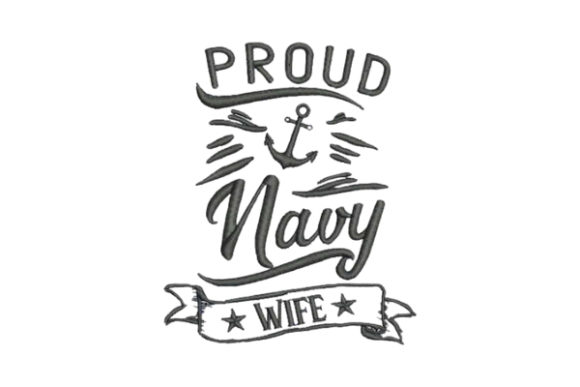
As an embroidery designer who has prepped dozens of booth collections for weekend craft fairs, I know the difference between a design that sits on a shelf and one that walks out the door. When I first opened the Proud Navy Wife machine embroidery design, I immediately recognized its potential for the military family market. This is not a generic sentiment piece. It speaks directly to a specific, proud community, and that is exactly the kind of targeting that drives sales at handmade markets.
Before I stitch out a single sample, I review the design assets carefully. The description promises gorgeous satin stitches and multiple embroidery file formats, which tells me the digitizer prioritized clean, raised lettering and a polished finish. For a craft fair product, that first tactile impression matters. Customers pick up an embroidered tote or apron and run their fingers over the stitching. If the satin feels dense, smooth, and well-placed, they perceive higher value. Proud Navy Wife is positioned to deliver that premium feel right out of the gate.
Where Proud Navy Wife Stands Out on the Table
Every booth needs a mix of bold statement pieces and subtle accents. I see Proud Navy Wife working best as a mid-sized focal design. It is not a tiny detail that gets lost on a crowded table, nor is it so oversized that it limits your product options. I would place it on the following items for maximum customer attention:
- Tote bags and market bags – This is the natural home for the design. A sturdy canvas tote with Proud Navy Wife centered on the front panel makes an instant gift for military spouses. It photographs well, stacks neatly on a booth shelf, and appeals to shoppers looking for a personal, meaningful carry-all.
- Aprons and tea towels – Kitchen items sell reliably at craft fairs. An apron with this design feels like a gift for a navy wife who loves to cook or host. The satin stitches stand up to gentle washing, and the patriotic angle adds a conversation starter at the booth.
- Embroidered patches – Small format patches are a low-cost, high-margin product. I would stitch Proud Navy Wife onto twill patches and offer them as iron-on or sew-on options. Customers can attach them to jackets, caps, or bags. Patches are also easy to batch produce the night before a show.
- Small pouches and zip bags – A cosmetic pouch or pencil case with this design makes a practical, affordable gift. The satin stitches read clearly on a small surface, and the design feels intentional rather than crammed.
- Pillow covers and home decor – A throw pillow with Proud Navy Wife adds a cozy, proud touch to a living room or bedroom. I would use a medium-weight linen or cotton blend to let the satin stitches pop.
Caps are another possibility, but I would approach them with caution. Curved cap surfaces require a different hoop and careful hooping technique. If the design has dense stitch areas, it may distort on a cap front. I recommend testing one sample on a cap before committing to a batch.
Production Notes for Batch Craft Fair Runs
When I am preparing for a weekend market, I need designs that stitch out consistently and quickly. Proud Navy Wife appears to be a straightforward satin stitch layout, which means minimal thread changes and predictable timing. That is a huge advantage for a small shop owner who is stitching ten to twenty items the night before the show.
Here are the practical points I consider before loading the embroidery file into my machine:
- Check the actual stitch count and hoop size. The product description does not list these numbers, so I would open the file in my software and verify. If the stitch count is over 10,000, it may take longer per item and require a larger hoop. If it is under 5,000, it will stitch quickly but may feel sparse on a large tote bag. Knowing these numbers helps me price the finished product correctly.
- Review thread colors. The design likely uses navy blue, white, and perhaps gold or red accents. I would confirm the exact color palette and test thread contrast on a scrap fabric. Dark threads on dark fabric can disappear, and light threads on white fabric can look washed out. A navy background with white or gold lettering often reads best.
- Stabilizer choice matters. Satin stitches need a firm, stable base. For tote bags and aprons, I use a tear-away stabilizer on medium-weight woven fabrics. For patches and caps, I switch to a cut-away stabilizer to prevent distortion. I always test a sample on the exact fabric and stabilizer combination I plan to use for production.
- Spacing and density. The description promises gorgeous satin stitches, but I still inspect the design for dense areas that could cause puckering on thin fabric or thread breakage on thick fabric. If the lettering is too tight, the satin may not lay flat. I would run a small test stitch-out on a scrap to confirm the density is appropriate.
First Impressions and Customer Engagement
At a craft fair, customers decide in seconds whether to stop at your booth. Proud Navy Wife has a clear, bold message that is instantly readable from a few feet away. That is a powerful advantage. Shoppers who are navy wives themselves, or who know a navy wife, will feel an immediate connection. The design does not require explanation. It is a pride statement, and that emotional pull often leads to a sale.
I also appreciate that the design is not overly cute or generic. It leans toward a proud, dignified aesthetic rather than a novelty or humorous tone. That makes it suitable for a wider range of products and ages. A young navy wife and a more seasoned spouse both might feel represented by this design. As a designer, I always look for that broad resonance within a specific niche.
For booth display, I would create a small cluster of products featuring Proud Navy Wife together. A tote bag, an apron, and a patch displayed on a small easel or pegboard give customers a clear vision of what they can buy. I also recommend having at least one real mockup photograph for Etsy listings or social media posts. A printable mockup can help, but nothing beats a photo of an actual stitched product to prove the quality of the embroidery file.
Density, Fabric, and Careful Use Notes
Every experienced embroidery designer knows that not every design works on every substrate. Proud Navy Wife uses satin stitches, which are beautiful but require attention to detail. Here are the specific areas I watch for:
- Dense stitch areas – If the design has large satin columns, they may pull on lightweight fabric. I would avoid using this design on thin, loose-weave fabrics like lightweight cotton voile or flimsy polyesters. Stick to medium-weight canvas, twill, denim, linen, or high-quality cotton.
- Small lettering – If the design includes small text, it may lose clarity when reduced to fit a very small hoop. I would not scale this design below 3 inches in width, especially if the text is a key part of the message. Test the smallest size you plan to offer before taking orders.
- Textured fabrics – Towels with a looped terry texture can bury satin stitches. If you want to stitch this design on a tea towel, use a dense towel or consider a towel with a smooth woven band. You can also use a water-soluble stabilizer on top of the towel to prevent the stitches from sinking.
- Dark fabric – Navy blue thread on navy fabric will disappear. If you plan to use dark fabric, switch to a light thread color such as white, gold, or light blue for the satin stitches. Always test the contrast on a scrap before stitching a finished product.
- Curved cap surfaces – As mentioned, caps require a curved hoop system and careful placement. The design may need to be scaled down slightly to fit the cap front without distortion. If you are new to cap embroidery, practice on a scrap cap first.
Photographing Proud Navy Wife for Online Listings
If you sell on Etsy or your own website, the product photos are your booth. Proud Navy Wife photographs well because of the clear contrast between the satin stitches and the fabric background. I recommend using natural light and a neutral background to let the design stand out. Take close-up shots that show the texture of the satin stitches, as well as lifestyle shots that show the product in use.
For Etsy sellers, include a photo of the design on a tote bag, a close-up of the stitching, and a shot that shows the scale. Customers want to imagine themselves or their loved one using the item. A photo of a tote bag hanging on a hook or an apron folded on a table helps them visualize the finished product. Do not rely solely on a printable mockup. A real stitched sample earns trust and reduces returns.
I also suggest creating a listing photo that highlights the multiple embroidery file formats included. Buyers who own a machine embroidery business want to know they can open the file in their software. Mentioning the formats in the listing text and showing a screenshot of the file types can reassure technical buyers.
Designer Checklist Before Production
Before you stitch out a batch of Proud Navy Wife products for your next craft fair, run through this checklist:
- Test the design on scrap fabric – Use the exact fabric weight and stabilizer you plan to use for production. Check for puckering, thread breakage, and satin stitch quality.
- Confirm thread contrast – Hold the thread colors against your fabric in natural light. If the design is hard to read, switch to a higher contrast color.
- Review spacing and density – Look for areas where satin stitches are too tight or too loose. Adjust the design in your software if needed, or contact the digitizer for a file modification.
- Verify hoop size – Make sure the design fits within your hoop without crowding the edges. Leave at least half an inch of clearance around the design for hooping stability.
- Use the right stabilizer – Medium-weight woven fabrics need a medium tear-away. Heavy canvas or twill may need a cut-away. Towels need a water-soluble topper.
- Create at least one real mockup – Stitch the design onto a finished product and photograph it. Use this photo for your booth display, Etsy listing, and social media posts.
- Compare fabric colors – Test the design on a few different fabric colors to see which one makes the satin stitches pop. Navy, white, cream, or light gray are strong candidates.
- Confirm commercial licensing – Check the license terms that came with the digital embroidery file. Some designers allow unlimited commercial use of finished products, while others require a separate commercial license. Confirm this before selling at a craft fair or on Etsy.
- Batch produce efficiently – Once you have confirmed the design works, stitch multiple items in a row. Keep the same hoop and thread colors to minimize setup time. This is how you maximize your production hours before a weekend show.
Final Thoughts on Proud Navy Wife
As an embroidery designer who has reviewed hundreds of machine embroidery designs for craft fair use, I give Proud Navy Wife a strong recommendation for sellers who serve the military spouse market. It is a clean, proud, emotionally resonant design that translates well onto tote bags, aprons, patches, pouches, and pillow covers. The satin stitch construction suggests a polished finish that will attract customers looking for a quality handmade product.
The design works best as a mid-sized focal element on medium-weight woven fabrics. Avoid thin or highly textured materials, and always test the stitch density and thread contrast before committing to a batch. With proper preparation, Proud Navy Wife can become a consistent seller in your booth, especially at craft fairs near military bases or in communities with a strong naval presence.
For the Etsy seller or small shop owner, this design offers a clear niche appeal, repeatable production potential, and strong visual presence in both in-person and online settings. Pair it with a thoughtful product display, real stitched samples, and accurate listing photos, and you have a solid addition to your embroidery product lineup. That is the kind of design asset that pays for itself across multiple shows and seasons.