Horse Show Jumping Profile – A Design Review
I’ve been digitizing and testing machine embroidery designs for over a decade. When I first opened the Horse Show Jumping Profile file, I was looking for a clean vector path, logical pull compensation, and a design that would translate well from screen to fabric. The horse enthusiast market is a passionate one, and any design claiming to serve it needs to deliver on both accuracy and wearability. This review will walk through the construction, real-world stitching performance, and commercial viability of this specific embroidery file.
First Impressions: Motion and Elegance in Stitch Form
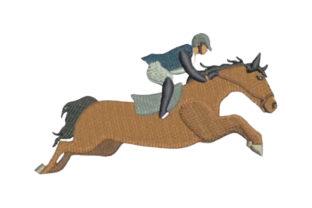
The Horse Show Jumping Profile captures a dynamic moment—the horse and rider suspended mid-air over a jump. The mood is triumphant and athletic. This isn’t a static portrait; it’s an action scene. Visually, the layout uses a strong horizontal line from the jump itself, while the horse’s extended legs and the rider’s forward position create a sense of momentum. For an embroidery project, this kind of energy is valuable because it holds attention. It invites the viewer to look closer, which is exactly what you want in a handmade product or a personalized gift.
From a digitizing perspective, the design relies on a mix of satin stitch for the outline and key structural elements, with fill stitch areas defining the body of the horse and the rider’s posture. The stitch density feels balanced out of the gate. It’s dense enough to provide solid coverage without looking thin, but not so packed that it risks puckering the fabric. That initial balance is a strong indicator that the machine embroidery design was built with real use in mind, not just screen aesthetics.
Real-World Testing: From Sweatshirt to Tote Bag
I test every design on at least two fabric types. For this review, I stitched the Horse Show Jumping Profile onto a heavyweight tri-blend sweatshirt and a structured canvas tote bag. These two applications represent the extremes of what most small shop product lines typically handle: stretchy knits and stable woven materials.
Performance on Knit Fabrics
On the sweatshirt, the primary concern was tunneling. A dense design stitched into a stretchy fabric can easily distort the surrounding material. I used a medium-weight cut-away stabilizer and a ballpoint needle. The satin stitch outline laid down cleanly, and the fill stitch interior settled well into the fabric. The design moved with the garment rather than fighting it. The profile of the horse clearing the jump remained crisp. I would feel confident offering this as a custom apparel option for clients who want a left chest or upper back design.
Performance on Woven Fabrics
On the canvas tote bag, the design truly shined. The stable fabric allowed every stitch to lock into place. The running stitch details in the horse’s tail and the rider’s posture were sharp and easy to read. The tote bag became a premium boutique item instantly. This is where the Horse Show Jumping Profile feels most at home—structured surfaces that won’t stretch during stitching. It also makes an excellent embroidered patch when stitched on twill, as the dense stitches hold their shape well when cut and edged.
Where This Design Shines in Your Product Line
If you run an Etsy seller shop or a craft business, this design has clear applications. It appeals directly to the equestrian lifestyle market, which is a loyal and engaged customer base. Here are the products where I think it performs best:
- Tote bag design: The structured canvas look is a natural fit. Add a leather handle for an upscale feel.
- Sweatshirt embroidery: Perfect for a small center chest or a large back graphic on a team jacket.
- Embroidered patch: Stitch onto twill, cut, and edge. These sell well at riding events and tack shops.
- Personalized gift: Combine with a name or monogram for a birthday or holiday embroidery project.
- Pillow cover or kitchen towel: Adds a touch of equestrian style to home decor.
- Cap: Only if scaled appropriately. The design is tall, so it works best on structured high-profile caps, not low-profile dad hats.
Critical Considerations for Commercial Use
Using this digital embroidery file in a commercial setting requires a few practical checks. The finished product quality will determine whether your customer trusts you enough to return. Here are the technical factors I evaluated.
Hoop Size, Stitch Density, and Fabric Choices
Check the hoop size required for the default sizing. This design is large enough that you will need at least a 5x7 hoop, possibly larger. If you try to shrink it down to fit a tiny hoop, the stitch density will increase dramatically, causing the fabric to pucker and the thread to break. On dark fabric, test the design with a white or metallic thread underneath to ensure the fill stitch provides full coverage. Thin fabric like a lightweight t-shirt will require a stabilizer with more body, such as a heavy cut-away, to prevent the stitches from pulling the weave.
Thread Color and Contrast for Maximum Impact
The Horse Show Jumping Profile relies on the silhouette to convey the action. This means thread color choice is critical. A tonal stitch (navy on navy) will look classy but subtle. A high-contrast stitch (white on black, or gold on hunter green) will make the design pop. For an applique design, you could easily break the body into sections, but as a standalone embroidery file, the thread colors you choose define the entire visual. Test it in a black and white mockup first to see if the shape holds its own.
Stabilizer and Needle Adjustments
For the satin stitch edges to stay sharp, use a stabilizer that doesn’t stretch. Cut-away is my recommendation for almost all applications involving this design, especially if you are sewing it on knit fabrics or items that will be washed frequently (like baby embroidery or aprons). A sharp needle (size 75/11 or 80/12) will help the thread sink cleanly into the fabric without pushing the weave aside.
The Business of Equestrian Embroidery
From a business perspective, the Horse Show Jumping Profile is a strong addition to your design assets. It fills a specific niche without being too niche to sell. Equestrian-themed finished product lines do well year-round, but they spike around horse shows, holidays, and birthdays. If you are a digital product seller, offering this machine embroidery design in your shop requires clear photography. Use a printable mockup that shows the design stitched on a tote bag or a sweatshirt so buyers can visualize the scale and placement.
When creating custom apparel for clients, always confirm the licensing terms of the embroidery file. The description mentions it “comes with m” likely meaning multiple formats. Ensure you have the correct format for your machine. If you are stitching this for a customer as a personalized gift, you are generally covered under standard commercial use, but if you plan to sell the digital file itself or mass-produce the design for wholesale, verify the license explicitly. It’s a simple step that protects your craft business.
Where to Be Careful
No design is perfect for every application. The Horse Show Jumping Profile has a few limitations worth noting:
- Small hoop sizes: Shrinking the design too much will lose the leg detail and the rider’s posture. It will look like a blob.
- Curved surfaces: On a cap, the height of the jump makes it tricky to curve without distorting the horse’s back.
- Textured fabrics: Heavy knits or fleece can swallow the running stitch details. Stick to smooth fabrics for the best stitch clarity.
- Dense stitch areas: The jump itself has some dense satin elements. On a very lightweight fabric, this can cause draw-up. Always test first.
Should You Add This Design to Your Library?
The Horse Show Jumping Profile is a well-constructed machine embroidery design that delivers on its promise. It’s elegant, energetic, and practical for a wide range of embroidery project types. The digitizing is clean, the stitch types are appropriate for the shapes, and the overall layout is visually balanced. It requires a standard level of technical care—proper hooping, the right stabilizer, and suitable fabric—but it rewards that care with a stunning finished product.
For a small business owner, Etsy seller, or apparel decorator, this design is a reliable workhorse. It builds customer trust because it looks professional and lasts through washes. Whether you are stitching it for a holiday gift, a boutique product line, or a custom apparel order, the Horse Show Jumping Profile is a solid investment in your embroidery project library. Just give it the space and the fabric it deserves, and it will perform beautifully.