No One Fights Alone: A Designer’s First Look
When I first opened the No One Fights Alone machine embroidery design, I was preparing a limited-edition sweatshirt drop for a small boutique brand that wanted to release something meaningful for October. The client had a clear vision: a premium, conscious collection that would resonate with their audience without feeling overly promotional. They handed me this design file and asked for my honest evaluation before we committed to production. Here is what I found as I reviewed every detail of this embroidery file from a commercial standpoint.
The Mood and Stitching Personality of No One Fights Alone
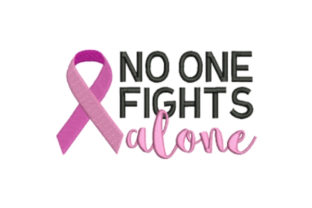
My first impression of No One Fights Alone is that it carries a quiet strength. It is not a loud, flashy design. Instead, it feels considered, intentional, and deeply human. The layout reads like a gentle affirmation, which makes it suitable for apparel that people want to wear as a personal statement rather than a billboard. The stitching personality leans toward the minimal and decorative side of the spectrum, with just enough presence to hold its own on a garment without overwhelming the fabric.
For a boutique brand, this is exactly the kind of mood that sells. Customers who buy awareness-themed apparel are often looking for something that feels authentic, not commercial. The design’s restraint gives it a handmade quality that digital sellers and Etsy shop owners can highlight in their product photography. When I pictured it on a neutral sweatshirt in heather gray or cream, the design felt grounded and warm. On darker fabrics, it would gain a subtle contrast that makes the words catch the light without screaming for attention.
One of the things I appreciated immediately is that the design does not rely on dense fill stitching to make an impact. That is a smart choice for a quote-based piece. It keeps the stitch density manageable, which directly affects how the design behaves on different fabric types. I will talk more about that later, but from a pure aesthetic standpoint, the open, airy feel of the lettering gives No One Fights Alone a versatile range of applications across pastel hoodies, oversized pullovers, and even cozy seasonal cardigans.
Placement Options for Sweatshirt and Hoodie Production
When I evaluate a design for sweatshirt embroidery, I always run through a few standard placement scenarios to see how the design adapts. For No One Fights Alone, the most natural home is a centered chest placement on a classic crewneck or an oversized hoodie. The quote is long enough to fill the chest area without looking cramped, and it leaves enough negative space around it to feel purposeful. That is important for small shop owners who want their finished product to look like it came from a thoughtful design studio, not a rushed production run.
I also tested the design mentally on a left chest placement, which is a favorite among apparel decorators for a more subtle, logo-like feel. The quote fits well in that compact space, though I would recommend checking the hoop size before committing to a small placement. If the design is scaled down too much, the readability of the words could suffer, especially on thicker fabrics. For a hoodie design, I would lean toward a centered chest layout at a moderate size so the message remains clear and impactful.
Sleeve accents are another possibility. A single-line version of the quote running vertically along a sleeve would be a beautiful detail for a boutique merchandise drop. That would require a separate embroidery file adjustment, but the design’s structure lends itself well to that kind of creative adaptation. For back designs, particularly on a relaxed-fit sweatshirt, the full quote centered between the shoulder blades would create a strong visual anchor for lifestyle product photography. I can already imagine how that would look in a mockup preview on an Etsy listing: clean, emotional, and wearable.
Technical Considerations for Commercial Embroidery
Now I need to get into the practical side of production, because a design that looks good on screen does not always stitch out well on fabric. Here is what I considered when reviewing No One Fights Alone for a real apparel run.
Thread Color and Contrast
The design’s effectiveness depends heavily on your thread color choices. For a pastel or neutral sweatshirt, a soft pink or blush thread would reinforce the Awareness theme without being too on the nose. On dark fabric, a white or silver metallic thread would make the words pop while keeping the overall look premium. I would avoid using too many thread colors on this design. One or two at most will preserve the minimal feel that makes the quote so wearable. The design does not need a lot of color changes to communicate its message, and that simplicity is a huge advantage for small shops trying to manage production time.
Stitch Density and Fabric Texture
The stitch density is moderate, which is ideal for sweatshirt embroidery on mid-weight fleece and French terry. Dense designs can cause puckering on stretchy fabrics, especially hoodie knits, but No One Fights Alone avoids that trap. The lettering is spaced well enough that the fabric can breathe beneath the stitches. That said, I always recommend testing on a scrap piece of your actual garment fabric before running a full batch. Every fabric texture behaves differently, and a quick test stitch-out will save you from wasting inventory on a placement that does not sit flat.
Stabilizer Choice and Hoop Placement
For a design like this, a tear-away stabilizer is usually sufficient for stable fabrics, but if you are working with a stretchy hoodie material, I would switch to a cut-away stabilizer to prevent the stitches from distorting over time. The hoop size needed for the design will depend on the final dimensions you choose, but it is compact enough to fit in a standard 4x4 or 5x7 hoop. That is a practical advantage for small shops that may not have commercial multi-needle machines. A 4x4 hoop will work if you scale the design appropriately, but I recommend checking the file details to confirm the exact measurements before you start.
Small-Size Readability and Washing Durability
Readability is a major concern for any quote-based design. If the letters are too small, the words blur together, especially on textured fabrics. I would not scale No One Fights Alone below about three inches in height for a chest placement. That keeps the text legible and preserves the emotional impact of the message. For washing durability, the moderate stitch density and open lettering mean the design is less likely to shrink or distort after repeated washes. That is a selling point you can mention in your product descriptions. Customers want to know that their handmade product will last, and a well-constructed embroidery design delivers that assurance.
How No One Fights Alone Affects Product Value and Brand Identity
From a business perspective, No One Fights Alone is a strong addition to any custom apparel lineup. It carries emotional weight without being heavy-handed, which makes it easier for customers to connect with the product on a personal level. For a boutique brand, that translates into higher perceived value and greater buyer trust. When shoppers see a design that feels authentic and well-made, they are more likely to pay a premium price and recommend the product to others.
For Etsy sellers and digital sellers, this design works well as a standalone item or as part of a curated awareness collection. You can pair it with other design assets like printable mockups and social media graphics to build a cohesive brand story. The finished product photographs beautifully because the quote is simple enough to read at a glance but meaningful enough to stop a scroll. That is a rare combination in the world of commercial embroidery.
I also want to note that the design’s versatility makes it suitable for both casual and slightly elevated apparel. On a standard crewneck sweatshirt, it reads as everyday wear. On a premium oversized hoodie with a soft hand feel, it becomes a statement piece. That flexibility is valuable for small shop owners who want to test different product categories without committing to a new design for each one. You can use the same digital embroidery file across multiple garments and simply adjust the placement and thread color to match the vibe of each piece.
Final Thoughts Before Production
Before you take No One Fights Alone to production, there are a few details I recommend confirming. The design description mentions that it comes with multiple embroidery file formats, which is excellent for compatibility across different machines. However, I would still verify the exact stitch density, hoop size, and any license terms if you plan to sell the finished products commercially. Those details are not always visible in a preview, but they matter deeply when you are running a small production run and need consistent results.
I would also suggest ordering a single test stitch-out on your chosen fabric before you cut into your inventory. This is a step I never skip, and it has saved me countless hours of rework. A test run will show you how the design interacts with your fabric texture, whether the thread colors read the way you expected, and whether the placement feels balanced on the garment. It is a small investment that protects the quality of your finished product and your brand reputation.
Overall, No One Fights Alone is a design that I would feel confident recommending to a boutique brand or an Etsy seller looking for a meaningful embroidery project. It is not a design that screams for attention, but it does something harder: it earns a place in someone’s wardrobe because it speaks to something real. That is the kind of machine embroidery design that builds lasting customer relationships and makes small shop products stand out in a crowded market.
If you are preparing a limited sweatshirt drop and want a design that feels both premium and personal, I would put No One Fights Alone on your shortlist. It stitches cleanly, wears beautifully, and carries a message that people genuinely want to share. That is a rare combination, and it is exactly what a thoughtful boutique brand needs to create a collection that matters.